How Experts Handle Complex Gutter Repair in Hackettstown

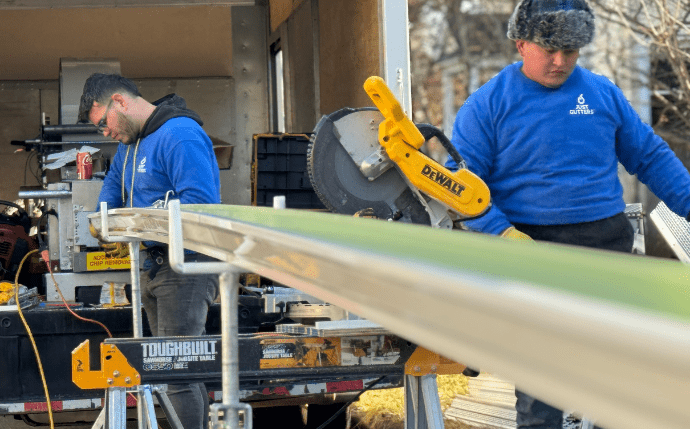
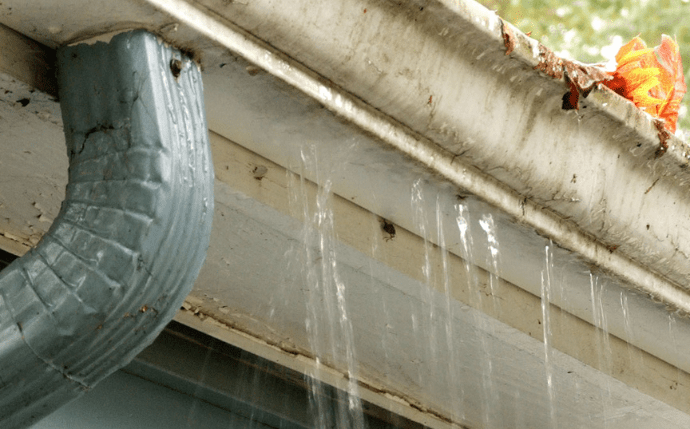
Gutters look simple from the ground. A narrow metal channel runs along the roof edge, catches rain, and sends it away from the house. That is the basic idea, but the real work is more demanding. Once a gutter system starts failing in multiple places at once, the repair stops being a quick ladder job and turns into a diagnostic exercise. Pitch, fascia condition, roof runoff volume, joint fatigue, hidden rot, ice stress, and drainage patterns around the foundation all start to matter.
That is especially true in a place like Hackettstown, where homes range from older colonials with aging wood trim to newer builds with long rooflines and oversized runoff areas. Local weather adds another layer. Heavy summer downpours expose capacity problems. Winter freeze and thaw cycles pull at spikes, open seams, and create ice buildup that bends metal in ways many homeowners do not spot until spring. By the time someone searches for Gutter Repair Hackettstown, the issue is often no longer a single leak. It is a system that has been under strain for years.
Experts approach that kind of repair differently. They do not start with sealant and optimism. They start by figuring out why the system failed, how far that failure has spread, and whether repair still makes more sense than replacement.
The difference between a simple fix and a complex repair
A simple gutter repair is straightforward. A small seam leak, one loose hanger, a short downspout extension that fell off. These are targeted corrections. They can often be handled in one visit with minimal disruption.
Complex gutter repair is another category entirely. It usually involves two or more underlying problems that interact with each other. A gutter may be sagging because the fasteners pulled loose, but the fasteners may have pulled loose because water and ice have been overloading that run for years. Water may be spilling over the front edge, but the true cause might be an undersized downspout, poor pitch, roof valleys dumping too much volume in one spot, or compacted debris creating a dam near an elbow. Sometimes the gutter itself is only part of the issue. The fascia behind it is soft, the soffit vents are pulling moisture, and the splash zone below has settled toward the foundation.
Professionals know that fixing the visible symptom without correcting the hidden cause is how callbacks happen.
A common example in Hackettstown is the long rear elevation on a two story home that backs onto a slightly sloped yard. Homeowners may notice erosion near the patio or dampness in the basement corner and assume the downspout simply needs an extension. Then a closer inspection reveals the gutter run has lost pitch in the middle, two seams have been patched before, and the downspout serving that section is trying to handle runoff from a broad roof plane plus a valley. Add winter ice and spring debris, and the system never had much of a chance.
What experts inspect before they touch anything
The best repair crews spend time looking before they start removing hardware. That may not feel dramatic, but it is often the most valuable part of the job.
They inspect the entire roof edge, not just the section where water is dripping. They look at shingle overhang, drip edge placement, fascia straightness, hanger spacing, outlet size, elbow condition, and signs of overflow staining. They also watch where the discharged water goes after it leaves the downspout. If it lands too close to the house, saturates mulch beds, or runs back toward the foundation, the gutter system is still failing even if the trough itself no longer leaks.
On older houses, they test the substrate. A gutter mounted to deteriorated fascia cannot hold properly, no matter how many new screws are installed. If the wood feels soft or splits around the fastener points, a durable repair may require carpentry first. Experienced technicians know when a gutter issue is really a trim issue in disguise.
They also consider roof geometry. Valleys, dormers, step downs, and transitions between roof sections create concentrated flow. A ten foot gutter segment under a valley often sees more punishment than thirty feet of straight run elsewhere. That is why experts do not treat every foot of gutter equally. They reinforce known stress points because those are the places where systems usually fail first.
Why Hackettstown homes create specific repair challenges
Hackettstown is not a one-style housing market. That matters for repair strategy. A ranch with short eaves and modern aluminum K-style gutters behaves differently from a Victorian era house with wood fascia, crown details, and multiple roof intersections.
Older homes often present the most complicated cases. The original trim may be uneven after decades of settling. Previous owners may have layered one repair over another, mixing fastener types or splicing incompatible sections. It is not unusual to find old spike-and-ferrule systems partially retrofitted with hidden hangers, or sealants applied over dirty seams that never bonded correctly. When that happens, experts have to undo bad work before they can do good work.
Newer homes bring their own problems. Builders sometimes install systems that are adequate on paper but leave little margin for clogged outlets or high intensity rain. During a cloudburst, a borderline system reveals itself quickly. Water overshoots corners, floods entryways, and carves channels through landscaping. The homeowner thinks the gutter is broken, but the deeper issue may be capacity and layout, not just wear.
Trees are another factor. Mature maples and oaks in the area can load a gutter with leaves, seed pods, and fine organic grit. That debris traps water, accelerates corrosion in some metals, and creates weight that distorts pitch. A repair expert pays attention to the surrounding landscape because maintenance burden affects which repair method will hold up best over time.
Repairing sagging runs without creating new problems
One of the most common signs of trouble is a sagging gutter. From the ground, it seems obvious that the fix is to tighten it back into place. In practice, that is where inexperienced work often goes wrong.
A sagging run is rarely corrected by simply driving in longer screws. First, the old alignment has to be checked with the proper pitch toward the outlet. Too flat, and the gutter will hold water. Too steep, and it can look visibly crooked along the fascia, especially on the front of the house where appearance matters. Most well-performing runs need only a subtle slope, but subtle does not mean casual. Even a small error can leave standing water.
Second, the mounting surface must be sound. If the fascia is compromised, professionals either replace the damaged section or anchor into structurally appropriate backing where possible. They do not rely on stripped holes. They also adjust hanger spacing based on stress points. In sections prone to ice load or heavy runoff, closer support can make a noticeable difference.
Third, they look for distortion in the gutter metal itself. Once aluminum has twisted or stretched, forcing it back into line may create a shape that still traps water or causes the front lip to roll. Sometimes a section can be reworked successfully. Other times, replacing part of the run is more honest and more cost effective than trying to save damaged material.
I have seen homes where a sagging rear gutter had been “repaired” three times in five years. Each attempt used more sealant and more screws. None addressed the rotten fascia hidden behind the gutter. After the wood was replaced and the run rehung with proper support, the chronic overflow stopped. The visible problem had looked like metal failure. It was actually mounting failure.
Leaks at seams, corners, and outlets
Leaks are tricky because water travels. A drip at one point may start several feet away. Professionals know this, so they trace staining patterns and test water flow instead of assuming the nearest seam is guilty.
Corners and outlets are frequent trouble spots. Corners expand and contract with temperature swings, and they handle directional change plus volume. Outlets concentrate force in a small area, especially if debris tends to collect there. On a house with steep roof sections feeding a single drop, the outlet area takes a beating. If the original cutout was too small or roughly made, clogging becomes more likely and overflow becomes routine.
A proper repair depends on the condition of the surrounding metal. If the joint is clean, sound, and only beginning to separate, resealing may be enough. If there is corrosion, wall thinning, or deformation, a patch may not last. Skilled technicians know the difference between a repair that buys real service life and one that merely survives until the next storm.
This is where material knowledge matters. Aluminum, galvanized steel, and copper all age differently. They also respond differently to sealants, fasteners, and thermal movement. An expert respects the material instead of forcing a one-size-fits-all fix.
When downspouts are the real culprit
Homeowners often focus on the horizontal gutters because that is what they can see from the yard. Yet many system failures start in the vertical drainage path.
A downspout that is too small, partially clogged, poorly placed, or inadequately discharged can compromise the entire run above it. Water backs up, debris settles, ice forms more readily, and the gutter starts to act like a storage trough instead of a transfer channel. Over time, that added weight loosens hangers and opens seams.
On complex repairs, professionals calculate runoff more carefully than people expect. They consider how much roof area drains to each outlet, whether a valley concentrates flow, and whether the downspout route has too many restrictive turns. Sometimes the fix is as simple as clearing a hidden blockage and adjusting the extension. Sometimes the smart move is adding another downspout, enlarging the outlet, or reconfiguring the drainage path entirely.
That kind of judgment is one reason Gutter Repair Hackettstown should never be reduced to a quick patch price alone. Two houses can show the same symptom and need completely different solutions.
The hidden role of fascia and soffit damage
A gutter is only as stable as the surface holding it. This is why good repair contractors inspect trim and not just metal.
Fascia boards take years of punishment when gutters overflow or when water gets behind the back edge. Paint peels first. Then wood fibers swell, soften, and split. By the time a gutter visibly pulls away from the house, the damage behind it may be advanced enough to require replacement sections. Soffits can suffer too, especially if overflowing water repeatedly wets vented panels or if ice dams force moisture backward.
A professional repair does not ignore this because cosmetic stability is not structural stability. A rehung gutter attached to weakened wood may look fine for a month. Then the next freeze, thaw, and rain cycle starts the failure again.
There is also a ventilation concern on some homes. If soffit vents are blocked by debris, insulation, or old repair work, moisture issues in the eave area can worsen. That is not always a gutter problem, but an experienced eye will flag it because the systems affect each other.
How experts decide between sectional repair and partial replacement
Not every complex problem means full replacement. In fact, many difficult systems can be restored effectively if the damaged areas are isolated and the rest of the system is worth keeping.
Professionals usually weigh several factors at once:
- Whether the metal still has enough integrity to hold fasteners and maintain shape.
- How many joints have already failed or been patched in the past.
- Whether the pitch can be corrected without fighting warped sections.
- The condition of fascia, soffit, and adjacent roof edge details.
- The homeowner’s maintenance expectations and budget.
If more than one-third of a run is compromised, or if the system has repeated leaks at multiple seams, partial replacement often becomes the cleaner path. It reduces labor spent chasing old defects and gives the installer a chance to improve pitch, outlet sizing, and support spacing at the same time.
That said, experts do not replace good material for the sake of simplicity. On a historic or architecturally distinctive house, preserving serviceable components may be the right call, especially where profile matching matters. Judgment is what separates a repair technician from a parts swapper.
Water testing tells the truth
One of the most revealing steps in complex gutter repair is controlled water testing. Visual inspection can identify likely trouble spots, but moving water confirms them.
A good technician may flush the run in stages, checking how the water behaves at normal https://zionovye907.opalvector.com/posts/emergency-gutter-repair-hackettstown-for-storm-damage flow and then at higher volume. Does it race cleanly toward the outlet or stall in the middle? Does a corner hold water after the flow stops? Does runoff shoot past the gutter beneath a valley because the shingle edge or drip path is wrong? Does the downspout discharge back toward the footing once the splash block shifts under pressure?
These tests often change the repair plan. A run that looked merely loose may turn out to be underpitched. A seam thought to be the problem may prove sound while water actually escapes from behind the gutter due to improper drip edge integration. Without testing, those details are easy to miss.
Cold weather damage and ice stress
Winter is rough on gutter systems in northwestern New Jersey. Snow load is one issue, but freeze and thaw cycles do the slow, expensive damage.
Water left standing in a poorly pitched section freezes, expands, and strains seams. Ice forming around partially blocked outlets creates back pressure. Heavy ridges along the front edge can twist hangers and deform the lip. If meltwater refreezes overnight in the downspout, the upper system can back up repeatedly.
Experts handling post-winter repairs look for patterns. If the same section fails every year, they ask why it is retaining water or collecting ice in the first place. Sometimes additional support is enough. Sometimes insulation and attic ventilation issues contribute to uneven melting at the roof edge. Sometimes the geometry under a valley demands a wider gutter or more downspout capacity. Cold weather damage is rarely random.
Common mistakes that make repairs fail early
A lot of bad gutter work comes from underestimating how precise the system needs to be. The mistakes are familiar. Sealant gets applied over damp or dirty metal. Hangers are spaced too far apart. Pitch is eyeballed. Old fastener holes are reused without addressing weak substrate. Extensions discharge into beds that slope back toward the house. Corners are patched instead of rebuilt when the metal has already fatigued.
The most damaging mistake, though, is repairing only what is easy to reach. A technician fixes the visible front corner because that is where the homeowner saw drips, but never checks the upper valley that is overwhelming the system during heavy rain. The drip returns, the homeowner blames the material, and trust is lost.
Complex repairs require patience. They also require saying uncomfortable things when necessary, such as, “This can be repaired, but only if we replace the fascia behind this section,” or, “We can seal that seam, but the bigger issue is that this run needs a second downspout.” Honest repair work is not always the cheapest in the moment. It is usually the cheapest over time.
What homeowners should expect from a thorough repair visit
A serious repair appointment should feel investigative, not rushed. The crew should inspect more than the obvious leak point, explain what failed, and describe whether the proposed fix addresses root cause or symptom. If wood damage is present, they should show it. If drainage around the foundation is part of the problem, they should say so.
They should also be specific about limitations. There is nothing wrong with a repair that extends the life of an aging system by a few years, provided everyone understands that is the goal. Problems arise when temporary work is sold as a permanent cure.
For homeowners evaluating Gutter Repair Hackettstown services, clarity matters more than sales language. Ask what caused the failure. Ask whether the fascia is sound. Ask if the downspout capacity is adequate for the roof area it serves. Ask how the contractor will verify pitch after rehanging the run. The quality of those answers tells you a lot.
Why expert repair protects more than the gutter
People think they are paying to stop drips. In reality, they are protecting several parts of the house at once.
A correctly functioning gutter system helps preserve siding, trim, masonry, window casings, entryways, and foundation conditions. It reduces splashback on lower walls, limits trenching in planting beds, and keeps discharge from saturating the same corner of the lot. On houses with basements, proper runoff control can make the difference between a dry perimeter and recurring moisture after every major storm.
That broader perspective is why experienced contractors do not treat gutters as isolated accessories. They view them as part of the building envelope and drainage strategy. When the repair is done well, the benefits show up in places homeowners do not always connect to the gutter at first, fewer stains on the siding, less mulch washout, drier basement corners, and less seasonal worry when the forecast turns ugly.
Good repair work leaves a system easier to maintain
The final mark of expertise is not just that the leak stops. It is that the system becomes easier to live with.
A thoughtful repair might include repositioning a downspout for better access, correcting a low spot that always collected sludge, replacing awkward elbows that trapped debris, or improving discharge so the extension stays in place. It might also involve advising the homeowner honestly about maintenance intervals based on nearby trees and roof shape. Some homes can go longer between cleanings. Others need regular attention because organic buildup is inevitable.
That kind of practical thinking rarely appears in a bargain repair. It shows up when the person doing the work has seen the same failures repeat across many seasons and knows how small details affect long term performance.
Complex gutter repair is rarely glamorous, but it is one of those trades where experience is visible in the finished result. The system sits straighter, drains cleaner, holds up better in the next hard storm, and stops causing collateral damage elsewhere. That is the standard experts aim for in Hackettstown, not a patched leak, but a gutter system restored to do its job under real local conditions.
Just Gutters LLC
Address: 262 Main St, Hackettstown, NJ 07840
Phone number: +12013319454
FAQ About Gutter Repair Hackettstown
What is the average cost to repair gutters?
The average cost to repair gutters is about $390, with most jobs ranging from $120 to $900 depending on the damage. You can explore detailed data and estimates on Angi.
Can I repair a gutter myself?
Yes, you can easily repair most common gutter problems yourself if you are comfortable working on a ladder.
How much does it cost to repair a leaking gutter?
The average cost to repair a leaking gutter ranges from $75 to $350. Most homeowners spend around $150 to $250 to hire a professional to patch small holes or reseal leaking joints. If the damage is severe and requires replacing entire sections, the price can increase from $300 to $800.